Kirkness and Barnhardt’s article, “First Nations and Higher Education: The Four R’s—Respect, Relevance, Reciprocity, Responsibility,” prompted me to think more deeply about how institutions frame problems in ways that preserve their assumptions.
Melanie Goodchild’s article on Relational Systems Thinking made me reflect on a concept often overlooked in research and sustainability practice: before seeking to understand or change a system, we may need to consider where we stand within it.
Melanie Goodchild’s article, “Relational Systems Thinking: That’s How Change Is Going to Come, from Our Earth Mother,” made me rethink a common idea: that understanding a system means identifying its components, their relationships, and feedback loops.
Willie Ermine’s article, “The Ethical Space of Engagement,” prompted me to consider an often-overlooked aspect of collaboration among diverse knowledge systems, institutions, or communities:
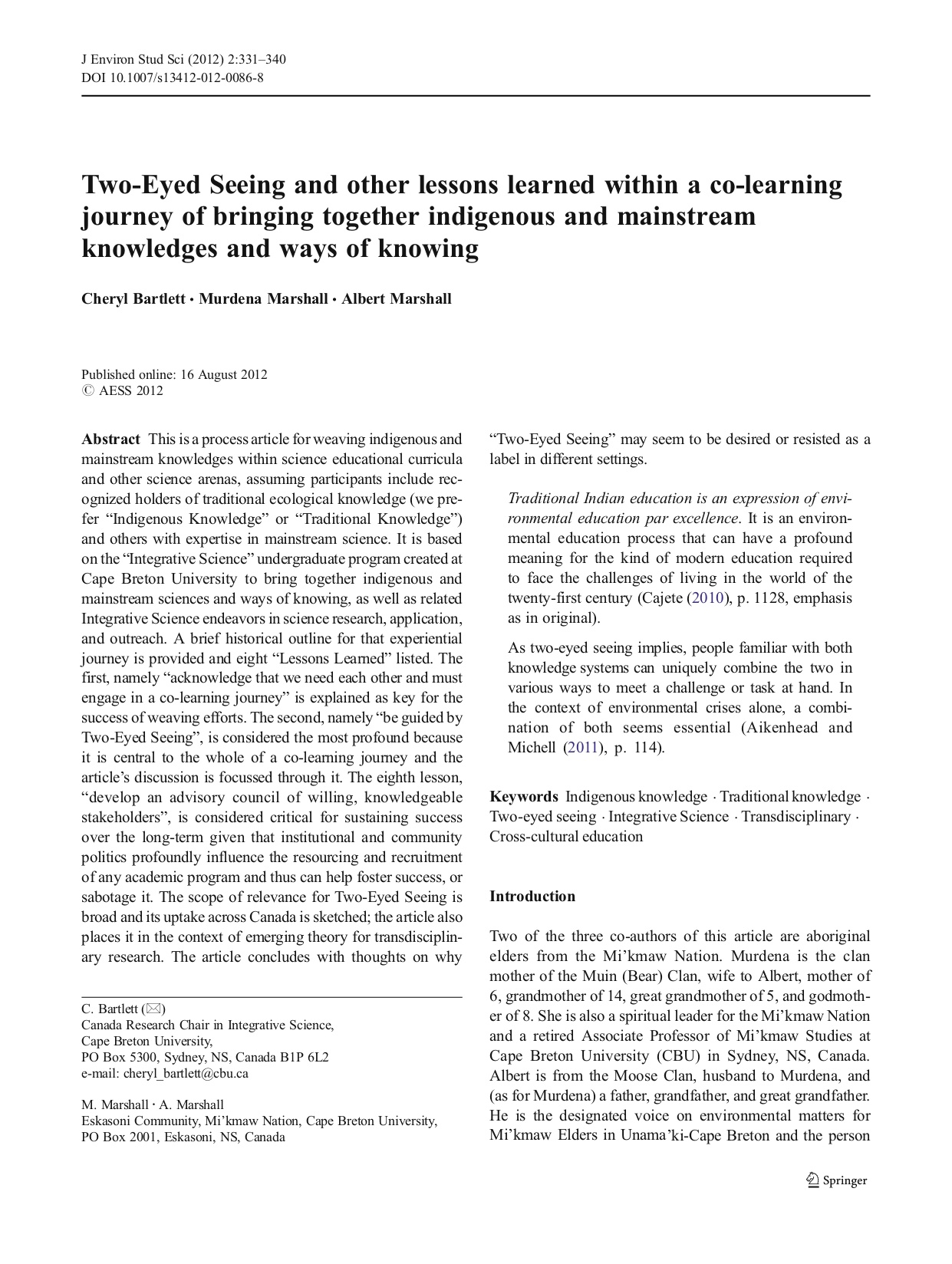
Bartlett, Marshall, and Marshall’s article on Two-Eyed Seeing made me reflect on a simple but demanding idea: meaningful understanding may require more than one way of seeing.
Mi'kmaw Elder Albert Marshall introduced Two-Eyed Seeing, or Etuaptmumk. It encourages us to learn from the strengths of Indigenous knowledge with one eye and from the strengths of Western knowledge with the other, and to use both together for everyone's benefit. Importantly, the approach recognizes each knowledge system as distinct rather than requiring one to be absorbed into the other.
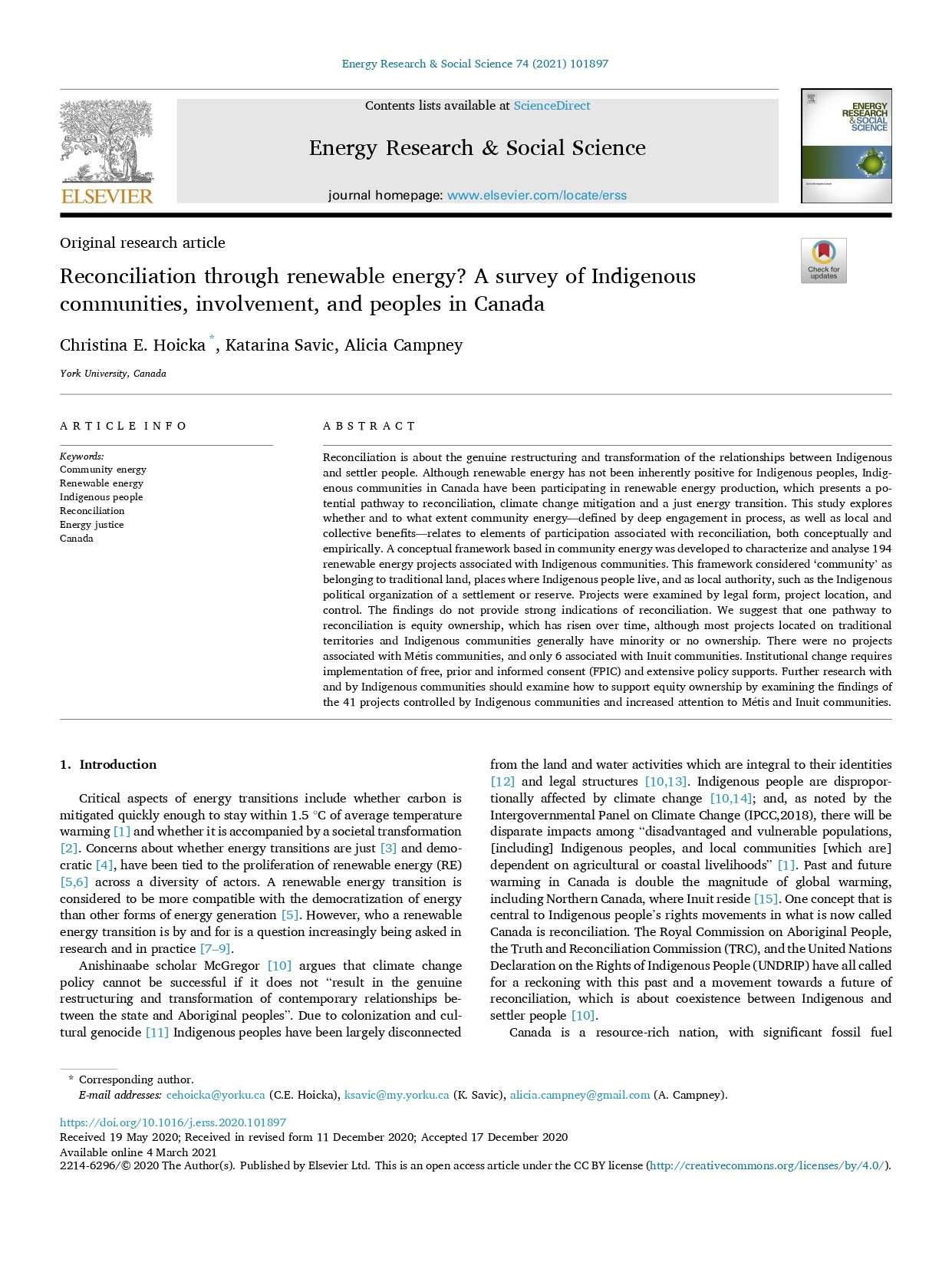
The transition to renewable energy is an unquestionable step toward a more sustainable future. Solar, wind, hydro, and other renewable technologies can reduce dependence on fossil fuels and help mitigate climate change. Yet the article by Christina Hoicka, Katarina Savic, and Alicia Campney, “Reconciliation through renewable energy? A survey of Indigenous communities, involvement, and peoples in Canada,” urges us to look beyond the technology itself.
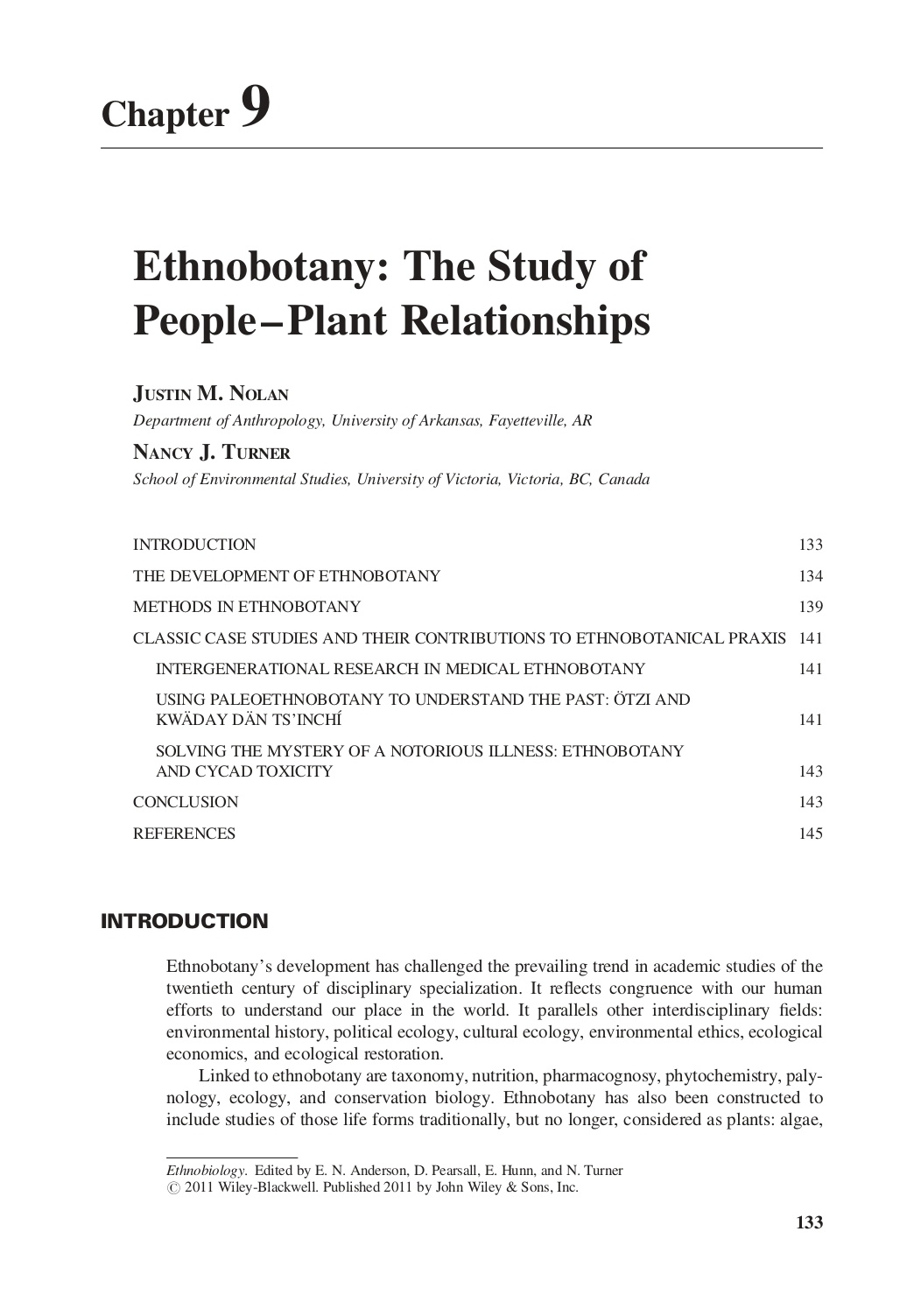
Justin Nolan and Nancy Turner’s chapter on Ethnobotany: The Study of People-Plant Relationships made me reflect on how environmental knowledge can become fragmented when we separate the ecological from the cultural.
We often confine serious learning to university classrooms, books, formal instruction, and recognized experts. The author of Land as Pedagogy invites us to consider a very different understanding. Writing from a Nishnaabeg context, Simpson shows that learning can also emerge from the land, relationships, observation, experience, community, language, spirituality, and practice.
We often talk about the environmental problems as though their central challenge were developing better technologies, strengthening government and international policies, improving institutional quality, or finding alternative ways to manage natural resources.
This article by Thomas King made me wonder whether the problem lies somewhere deeper: in the stories through which we have learned to understand ourselves and our place in the world.