Education
Razaq Thoughts / Essays & reflectionsWhat Do We Miss When We Study Plants Without Studying People?
Justin Nolan and Nancy Turner’s chapter on Ethnobotany: The Study of People-Plant Relationships made me reflect on how environmental knowledge can become fragmented when we separate the ecological from the cultural.
- Written by
- RASAQ RAIMI
- Published
- Reading time
- 3 min read
What Do We Miss When We Study Plants Without Studying People?
Justin Nolan and Nancy Turner’s chapter on Ethnobotany: The Study of People-Plant Relationships made me reflect on how environmental knowledge can become fragmented when we separate the ecological from the cultural.
People often study plants by species, distribution, chemical composition, productivity, medicinal properties, and conservation status. While these forms of knowledge are important, Nolan and Turner remind us that plants also exist within human relationships: as food, medicine, memory, identity, ceremony, livelihood, language, and cultural continuity.
This is what makes ethnobotany interesting. It does not treat plants as isolated biological objects. Instead, it asks how people know, use, name, value, remember, and sustain relationships with plants over time. The field itself is interdisciplinary, connecting ecology, conservation biology, anthropology, environmental studies, geography, linguistics, and other disciplines.
I found the authors’ emphasis on participation and collaboration especially important.
Many ethnobotanical studies can't be conducted solely in labs, archives, or offices. Researchers often engage directly with communities, immersing themselves in the environments where they practice knowledge daily. Nolan and Turner define participant observation as activities such as gardening, gathering, fishing, preparing meals, collecting water, and sharing everyday routines with community members. This hands-on involvement allows researchers to observe knowledge deeply rooted in daily life, so much so that community members may never consider explaining these insights in a standard interview.
That idea is worth pausing over.
Not all-important knowledge announces itself as knowledge.
Sometimes it is carried in practice.
It may be present in how a plant is harvested, when it is gathered, who gathers it, what is left untouched, how it is prepared, what stories accompany it, and the responsibilities that govern its use.
Therefore, if researchers enter such settings with only predetermined questions, some of the most meaningful knowledge may remain invisible, not because it is absent, but because the research process was not designed to recognize it.
Nolan and Turner also explain why this matters for sustainability. They note that cultural philosophies and worldviews can shape collective behaviour toward other species and the environment, and that Indigenous and local knowledge systems have become increasingly important for biodiversity conservation and sustainability.
This suggests that conserving biodiversity may require more than protecting individual species or ecosystems. It may also require safeguarding the relationships, practices, languages, memories, and knowledge systems through which communities have learned to live with those species.
The authors also raise an ethical issue that should not be overlooked. As ethnobotany developed, greater attention has been paid to community priorities, ethical protocols, equitable partnerships, and the responsible sharing of benefits derived from traditional ecological knowledge.
That shifts the role of the researcher.
The researcher is not simply someone who arrives, records knowledge, and leaves with information. Meaningful research requires relationships, responsibility, permission, reciprocity, and respect for the people whose knowledge makes the research possible.
Perhaps this is one of the most important insights I take from ethnobotany:
“To understand an ecosystem, it may not be enough to know what grows there. We may also need to understand the relationships that have allowed people and plants to live together over generations”.
A plant can be a biological species.
But it can also be medicine.
Memory.
Food.
Identity.
Responsibility.
And relationship.
Sustainability becomes richer when we learn to see all of these dimensions together.
Reflection on Justin M. Nolan and Nancy J. Turner’s “Ethnobotany: The Study of People-Plant Relationships.”
#Ethnobotany #IndigenousKnowledge
#Sustainability #TraditionalEcologicalKnowledge
#Biodiversity #PeoplePlantRelationships
#EnvironmentalKnowledge
Work Under Review
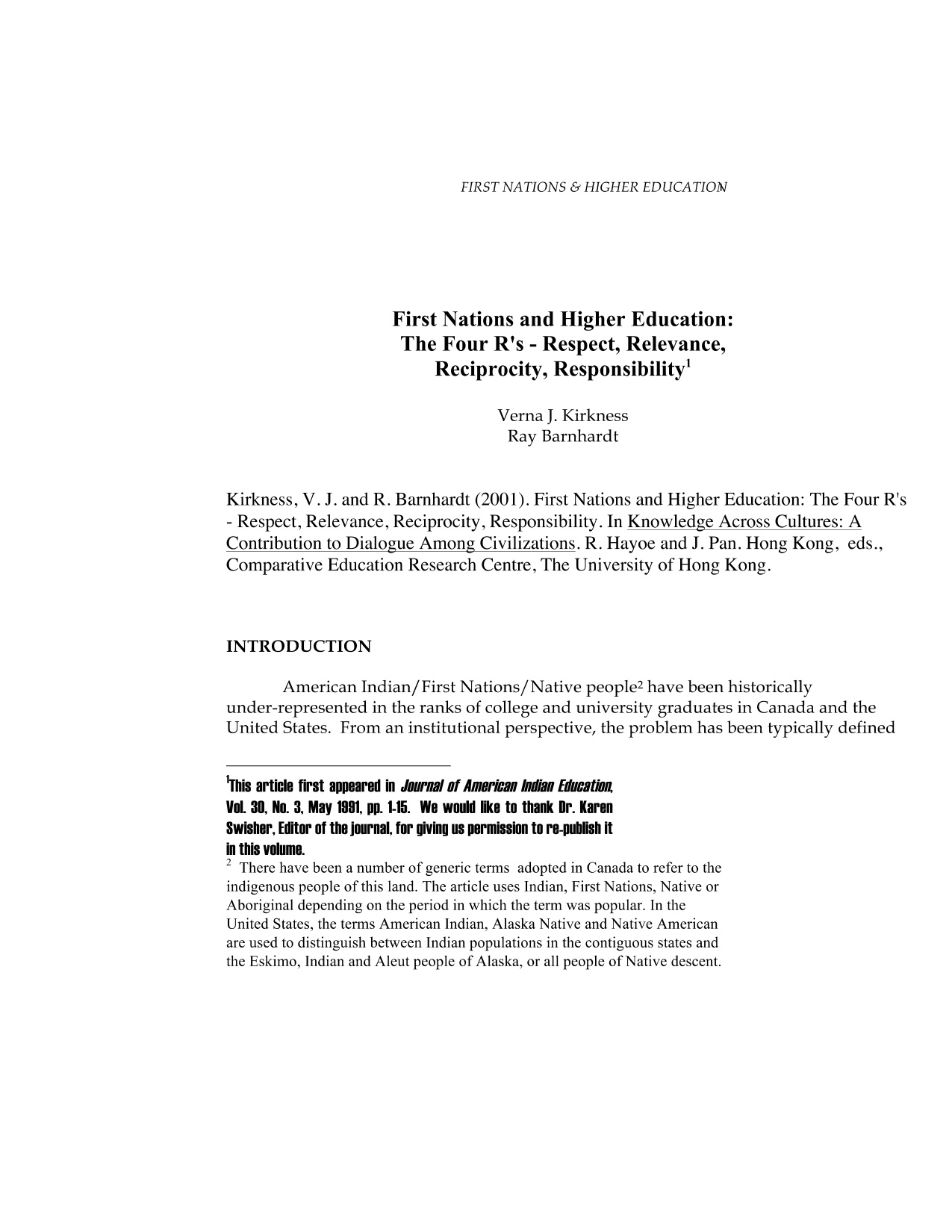
Ethnobotany: The Study of People–Plant Relationships
- Original author
- Nolan, J. M., & Turner, N. J. (2011)
- Nolan, J. M., & Turner, N. J. (2011) A.pdf
The original work discussed in this article.
Room for another perspective
Join the discussion
What stayed with you? What would you question? Thoughtful disagreement and shared experiences make a good article the start of a conversation.
The research relationship should probably continue after data collection ends. Otherwise the emphasis on reciprocity risks becoming another good intention that disappears when the paper is finished.
The observation that research questions can make knowledge invisible feels relevant beyond ethnobotany. A method can be rigorous about the wrong questions.
The harvesting example made the distinction click for me. Knowing a species name tells us very little about why someone leaves particular plants untouched.
How do Nolan and Turner distinguish participation from becoming intrusive? Spending more time with people may reveal more, but it also asks more of their time and patience.
The closing list changes the scale of the discussion. Moving from food to identity to responsibility makes sustainability feel like a question of relationships, not only stocks of resources.
I would be careful about implying that cultural continuity always supports biodiversity. Traditions can change, and a conservation project still needs to examine what particular harvesting practices actually do.
What happens when members of the same community disagree about how a plant should be used? The language of community knowledge can make internal differences easy to overlook.